In astrology, a retrograde planet refers to a planet that appears to move backward through the zodiac when viewed from Earth. However, planets do not actually reverse their direction in space. This phenomenon is related to how planets move around the Sun and how we observe them from Earth.
From an astronomical perspective, all planets orbit the Sun at different speeds and distances. Sometimes Earth moves faster than another planet in its orbit and overtakes it. When this happens, the planet may appear to slow down, stop, and move backward in the sky for a period of time.
A simple way to imagine this is when you pass a slower car on the highway. For a moment, the other car may appear to move backward relative to your position, even though it is still moving forward. In astronomy this effect is called apparent retrograde motion.
Because of this change in relative motion, the planet’s movement in the sky appears to change speed. During the retrograde phase the planet seems to slow down and move backward, and when the retrograde period ends, the planet resumes its direct (forward) motion and appears to move normally again.
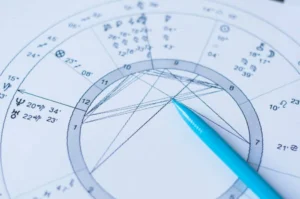
In astrology, retrograde motion is interpreted symbolically. Astrologers believe that when a planet goes retrograde, the themes associated with that planet may become more introspective, reflective, or internalized rather than expressed outwardly.
Which Planets Can Go Retrograde?
Most planets used in astrology experience retrograde motion at certain times of the year. These include:
- Mercury
- Venus
- Mars
- Jupiter
- Saturn
In Vedic astrology, the lunar nodes Rahu and Ketu are also considered retrograde because they move through the zodiac in a backward direction most of the time.
Each planet has its own retrograde cycle depending on its orbital speed and distance from the Sun. Some planets go retrograde more frequently than others.