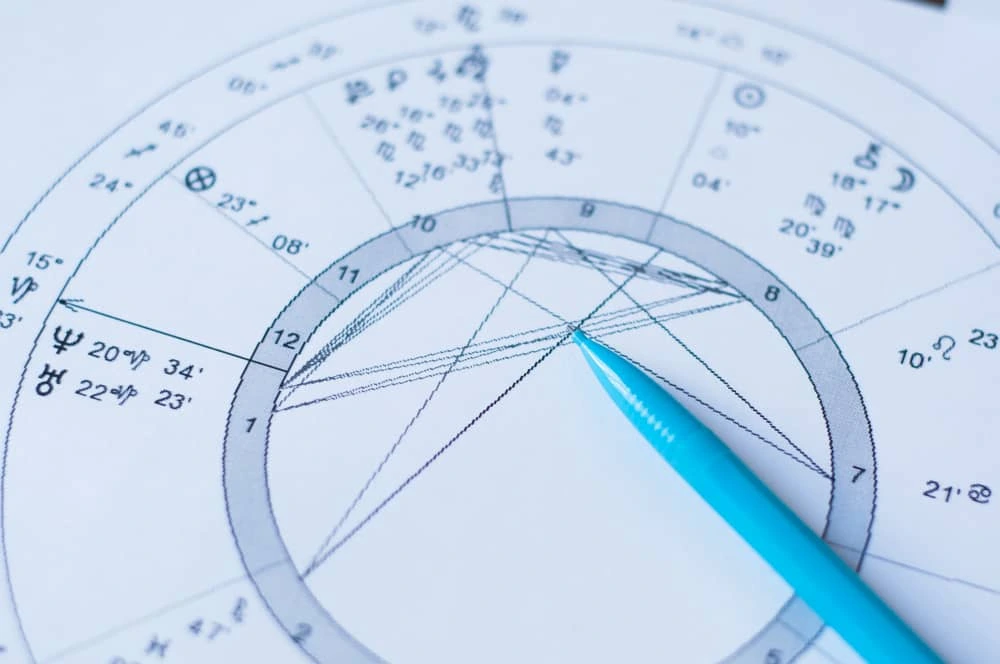
Before understanding astrological transits, it is helpful to briefly understand the scientific meaning of the word transit.
In astronomy, according to organizations like NASA, a transit occurs when a planet passes between an observer and a star. During this event, the planet blocks a small portion of the star’s light. Astronomers use this method to detect and discover planets outside our solar system, known as exoplanets. By observing tiny dips in a star’s brightness, scientists can confirm the presence of planets orbiting it.
However, in astrology, the meaning of a transit is different.
Astrological Meaning of Transit
In astrology, a planetary transit refers to the current position and movement of planets across the sky at a particular moment in time. Astrologers observe how planets move through different regions of the zodiac and interpret the influence these movements may have on life events, moods, and energies.
Ancient Vedic sages (Rishis) divided the entire sky into 12 equal sections. Since the zodiac circle contains 360 degrees, each section represents 30 degrees.
Each of these twelve sections corresponds to a zodiac sign, which are:
Aries, Taurus, Gemini, Cancer, Leo, Virgo, Libra, Scorpio, Sagittarius, Capricorn, Aquarius, and Pisces.
According to astrological traditions, each zodiac sign carries a distinct energetic quality. When a planet travels through a specific zodiac sign, it interacts with the unique characteristics of that sign.
This movement of a planet through the zodiac is called a planetary transit.
Example of Planetary Transit
For example, when the Sun moves through Aries, astrologers describe it as “Sun transiting Aries.” When Jupiter moves through Gemini, it is called “Jupiter transit in Gemini.”
Because every planet moves at a different speed, their transits vary in duration. Some planets change signs within days or weeks, while others may stay in the same sign for months or even years.
By studying planetary transits, astrologers analyze how cosmic movements may influence global events, personal experiences, and astrological charts.
Below you can see the current planetary transits, showing which zodiac sign each planet is currently moving through.
| Planet | Sign | Degree | Nakshatra | Status |
|---|---|---|---|---|
| Sun |
Gemini

|
29° 31′ | Punarvasu | D |
| Moon |
Cancer

|
21° 36′ | Ashlesha | D |
| Mercury |
Gemini
|
24° 53′ | Punarvasu | R |
| Venus |
Leo

|
12° 56′ | Magha | D |
| Mars |
Taurus

|
18° 06′ | Rohini | D |
| Jupiter |
Cancer
|
9° 25′ | Pushya | D |
| Saturn |
Pisces

|
20° 39′ | Revati | D |
| Uranus |
Taurus
|
10° 24′ | Rohini | D |
| Neptune |
Pisces
|
10° 24′ | Uttara Bhadrapada | R |
| Pluto |
Capricorn

|
10° 33′ | Shravana | R |
| Rahu |
Aquarius

|
7° 47′ | Shatabhisha | R |
| Ketu |
Leo
|
7° 47′ | Magha | R |
 1
2
Ma(18.11) Ur(10.41)
3
Su(29.51) Me(24.89) (R)
4
Mo(21.60) Ju(9.42)
5
Ve(12.94) Ke(7.79) (R)
1
2
Ma(18.11) Ur(10.41)
3
Su(29.51) Me(24.89) (R)
4
Mo(21.60) Ju(9.42)
5
Ve(12.94) Ke(7.79) (R)  6
6
 7
7
 8
8
 9
10
Pl(10.55) (R)
11
Ra(7.79) (R)
12
Sa(20.65) Ne(10.40) (R)
9
10
Pl(10.55) (R)
11
Ra(7.79) (R)
12
Sa(20.65) Ne(10.40) (R)