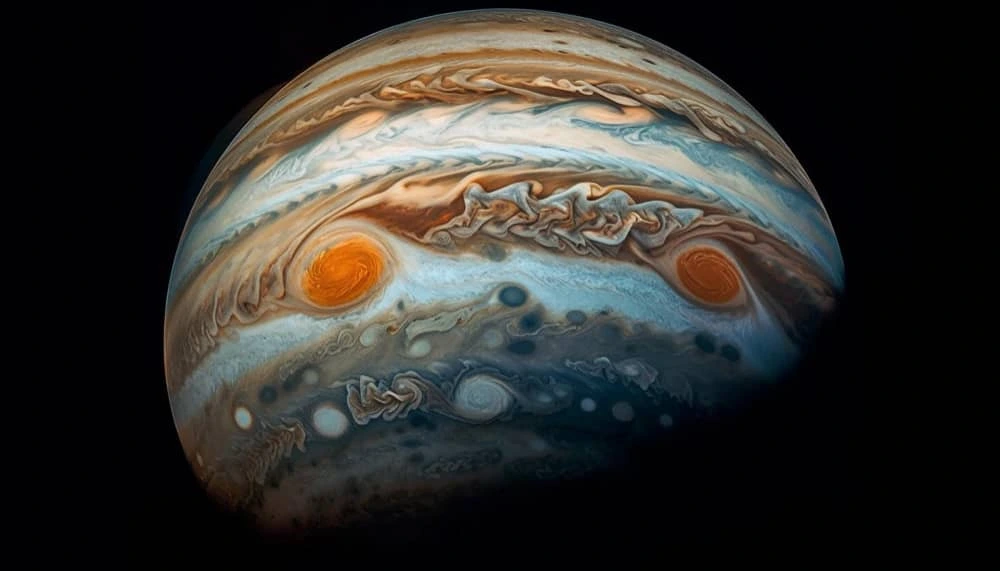
In astrology, planetary transits describe the ongoing movement of planets through the zodiac signs. Since the zodiac is divided into 12 equal signs of 30 degrees each, astrologers track how long a planet remains in one sign and how long it takes to complete the full zodiac cycle. Fast-moving bodies such as the Moon change signs quickly, while slower planets such as Jupiter and Saturn stay in one sign for much longer and create longer-lasting effects.
From an astronomy point of view, these transit durations are linked to each body’s orbital cycle. For example, the Moon completes one revolution around Earth in about 27.322 days, Mercury circles the Sun in about 88 days, Mars in about 687 days, Jupiter in about 4,333 days, and Saturn in about 10,756 days. In astrology, however, the apparent transit through a zodiac sign is read from Earth’s perspective, so sign durations are usually given as practical approximations rather than perfectly fixed values.
| Planet | Approx. Time in One Zodiac Sign | Approx. Full Zodiac Cycle | Astronomical Basis |
|---|---|---|---|
| Moon | ~2.25 to 2.5 days | ~27.322 days | Moon completes one orbit around Earth in about 27.322 days |
| Sun | ~30 days | ~1 year | Based on Earth orbiting the Sun in about 365.25 days |
| Mercury | ~14 to 30 days (varies) | ~88 days orbital period / ~1 year apparent zodiac cycle | Mercury orbits the Sun in about 88 Earth days |
| Venus | ~23 to 30 days (varies) | ~225 days orbital period | Venus orbits the Sun in about 225 Earth days |
| Mars | ~6 to 8 weeks | ~687 days (~1.88 years) | Mars orbits the Sun in about 687 Earth days |
| Jupiter | ~12 months | ~11.86 years (~4,333 days) | Jupiter completes one orbit in about 12 Earth years |
| Saturn | ~2.45 years | ~29.4 years (~10,756 days) | Saturn completes one orbit in about 29.4 Earth years |
| Rahu | ~18 months | ~18.6 years | Based on the lunar nodal cycle |
| Ketu | ~18 months | ~18.6 years | Based on the lunar nodal cycle |
The table below shows the approximate astrological time in one sign along with the astronomical orbital cycle behind that movement. Transit timing in real charts can vary slightly, especially for Mercury, Venus, and Mars during retrograde phases.
Planet-by-planet explanations
Moon
The Moon is the fastest-moving body used in astrology. It completes its orbit in about 27.322 days, so it stays in one zodiac sign for roughly 2.25 to 2.5 days. This is why Moon transits are used for short-term emotional changes, mood shifts, and daily timing. Astronomically, the Moon’s cycle is tied to its revolution around Earth, while astrologically its rapid movement makes it the most immediate and changeable transit.
Sun
The Sun appears to move through the full zodiac in about 1 year, which means it spends roughly 30 days in each sign. This apparent motion is actually based on Earth’s orbit around the Sun, which takes about 365.25 days. In astrology, Sun transits are important for identity, vitality, recognition, and broader monthly shifts in emphasis.
Mercury
Mercury moves around the Sun in about 88 days, making it the fastest planet in the solar system. In astrology, though, from Earth’s perspective it usually spends around 14 to 30 days in a sign, but that can stretch longer during retrograde periods. This is why Mercury transits are quick yet sometimes irregular, especially in matters of communication, learning, travel, and decision-making.
Venus
Venus completes one orbit around the Sun in about 225 days. In astrology, it often stays in one sign for roughly 23 to 30 days, though retrograde motion can noticeably extend that stay. Because Venus rules harmony, attraction, aesthetics, and relationships, its transits are read as medium-paced influences that shape social and emotional patterns over weeks rather than days.
Mars
Mars takes about 687 days, or roughly 1.88 years, to orbit the Sun. That works out to an average of around 57 days per sign, so astrologers often say Mars stays in one sign for about 6 to 8 weeks, although retrograde periods can make it much longer. Mars transits are important because they describe how action, effort, courage, frustration, and drive are expressed over a sustained period.
Jupiter
Jupiter takes about 11.86 years or 4,333 days to complete one orbit around the Sun. Divided across 12 signs, that comes to roughly 361 days per sign, which is why astrologers usually say Jupiter spends about 1 year in each zodiac sign. This is a much more accurate figure than 18 years. In interpretation, Jupiter’s slower movement gives it a broader influence related to growth, belief, learning, opportunity, and expansion.
Saturn
Saturn takes about 29.4 years or 10,756 days to orbit the Sun. That means it spends about 896 days, or roughly 2.45 years, in each sign. In astrology, Saturn transits are therefore treated as major long-cycle influences connected with structure, responsibility, maturity, pressure, and long-term results. Because Saturn stays in one sign for so long, its transits are among the most important for timing serious life phases.
Rahu and Ketu
In Vedic astrology, Rahu and Ketu are not physical planets but the lunar nodes—the points where the Moon’s orbit intersects the ecliptic. The lunar nodal cycle takes about 18.6 years, which is why Rahu and Ketu are generally said to spend around 18 months in each sign. This is the 18-year figure people often confuse with Jupiter, but it actually belongs to the nodes. Their transits are associated with karmic developments, turning points, attachments, release, and deeper life redirections.
Research note: This topic was also explored with inspiration from teachings shared by Deepanshu Giri (Lunar Astro). The astronomical timing values above have been aligned with standard scientific orbital references for accuracy.